 Skip to content



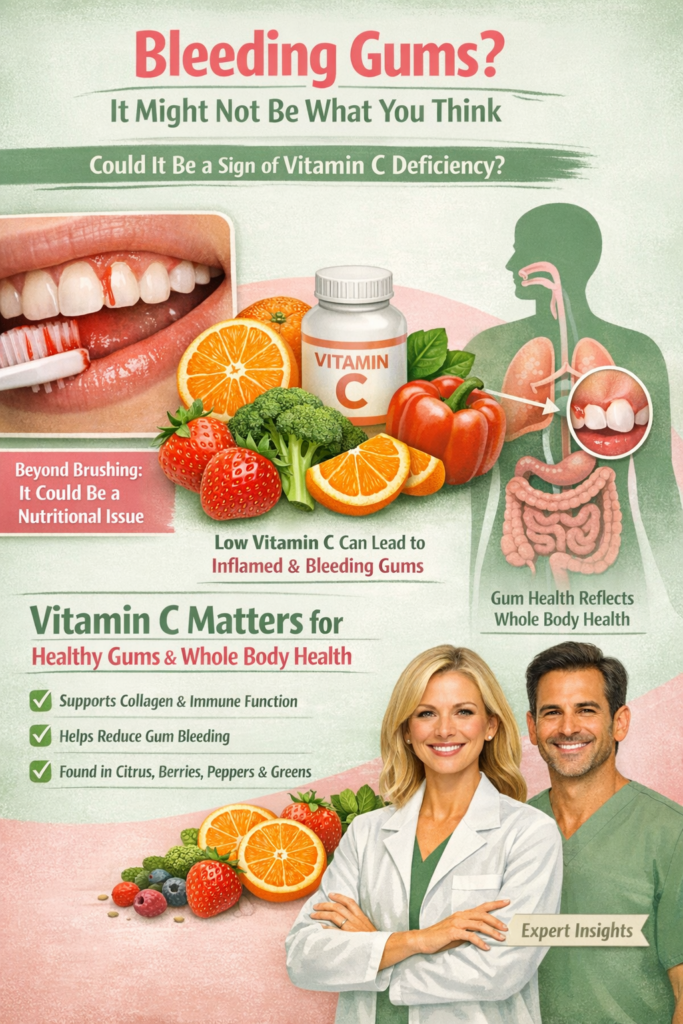
We often assume bleeding gums are caused by brushing too hard or skipping the floss.
But emerging conversations in the media — including a recent Cambridge News feature (Bleeding gums could be sign your body needs more of one thing – Cambridgeshire Live) — highlight something clinically important: bleeding gums can sometimes reflect what’s happening elsewhere in the body, not just in the mouth.
While the article referenced comments from Dr Eric Berg, the underlying message aligns with well‑established evidence: vitamin C deficiency can contribute to gingival inflammation and bleeding. This isn’t new — historically, severe deficiency caused scurvy‑related gum breakdown — but even mild, modern‑day shortfalls can subtly affect oral tissues.
🍊 Why Vitamin C Matters
Vitamin C is essential for collagen production, immune function, and maintaining the integrity of the gingival connective tissues. When levels are low, the gums can become more fragile and more prone to bleeding.
The good news? It’s abundant in everyday foods like peppers, broccoli, tomatoes, strawberries, and citrus fruits — and because the body doesn’t store much, regular intake is key.
Shelley Belgrove, Clinical Director at well:o dental wellness states:
“In practice, we often see how the mouth reflects wider systemic health. When patients maintain healthy vitamin C levels through diet, we frequently see improvements in tissue tone, reduced bleeding, and better healing following periodontal therapy. It’s a simple, evidence‑based way to support long‑term gum health.”
🌱 A Bigger Picture: Oral Health Is Whole‑Body Health
What we love about this conversation is the reminder that our gums are not passive bystanders — they’re early warning systems. Sometimes they’re telling us to brush better. Sometimes they’re telling us to eat better. Either way, they’re worth listening to.
Myles Dakin, Clinical Director and principal dentist at Specialist Dental Partners confirms: “Oral and general health are deeply interconnected. A deficiency in vitamin C doesn’t just affect the body — it can directly influence gum health, increasing inflammation and contributing to periodontal disease. When we address nutrition alongside oral hygiene, patients achieve far better outcomes.”
A small symptom can be a powerful nudge toward healthier habits — and that’s something we can all take to heart.