 Skip to content



Breaking the cycle of inflammation through periodontal therapy
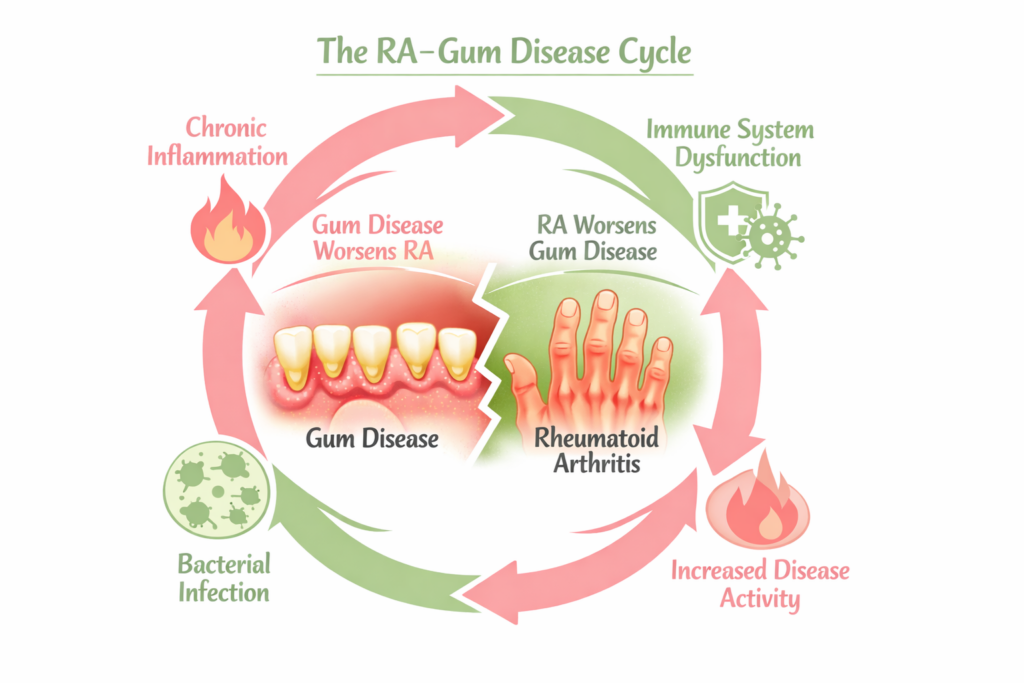
A major new study has revealed something remarkable — and deeply important for anyone living with chronic inflammation. Researchers have identified a two‑way, self‑reinforcing relationship between rheumatoid arthritis (RA) and periodontitis (gum disease). In other words, each condition can worsen the other, creating a vicious cycle of inflammation throughout the body.
Published in the Journal of Clinical Periodontology, the research brings together teams from the University of Birmingham, the NIHR Birmingham Biomedical Research Centre, the University of Michigan and Queen Mary University of London.
🔍 What the researchers found
Across 159 participants — including RA patients with and without gum disease, individuals with gum disease alone, and healthy controls — the study uncovered several striking patterns:
- RA patients had distinct oral microbiomes, even before gum disease developed. Their oral bacteria were richer, more diverse, and formed dense interaction networks.
- Specific bacteria, including Cryptobacterium curtum and Prevotella species, were strongly linked to RA and correlated with pro‑inflammatory cytokines.
- RA patients showed higher antibody levels against oral pathogens, especially Porphyromonas gingivalis — a bacterium associated with protein citrullination, a key process in RA autoimmunity.
- The severity of gum disease closely tracked RA activity, including joint swelling and pain.
Professor Iain Chapple, co‑lead for oral, intestinal and systemic health at Birmingham’s NIHR Biomedical Research Centre, described the findings as the first clear evidence of a circular relationship between the two diseases — where RA‑driven inflammation disrupts the oral microbiome, and harmful oral bacteria then amplify RA activity.
🛠️ Breaking the cycle: periodontal therapy
Perhaps the most hopeful finding is this: treating gum disease can interrupt the inflammatory loop.
Intensive non‑surgical periodontal therapy led to:
- Reduced gum inflammation and restored balance between oral bacteria and the immune system
- Significant drops in inflammatory cytokines in gum fluid
- Lower circulating antibodies to oral bacteria
- Improved RA clinical scores, including reduced joint tenderness and disease activity
- A “re‑wiring” of immune–microbial interactions, strengthening the body’s ability to control harmful bacteria
As co‑author Dr Isabel Lopez‑Oliva noted, these benefits were seen even in patients with established RA, opening the door to new integrated care pathways.
🌿 Why this matters
This research reinforces something we champion every day at well:o: oral health is whole‑body health.
Gum disease isn’t just a local problem — it’s a systemic one. And for people living with inflammatory conditions like RA, periodontal therapy isn’t simply about protecting teeth and gums; it may help reduce wider inflammation and improve quality of life.
Integrated, prevention‑first care isn’t a nice‑to‑have. It’s essential.